Trying to choose between a smaller hometown feel and a bigger city setup for your first home? If you are deciding between Asheboro and Greensboro, you are not alone. Both markets can work for first-time buyers, but they offer very different day-to-day experiences, price points, and housing options. Here is a clear look at how the two compare so you can choose the home base that fits your budget, lifestyle, and plans best. Let’s dive in.
Asheboro vs. Greensboro at a glance
At the highest level, this choice comes down to small-town scale versus city variety. Census estimates for 2025 put Asheboro at 27,990 residents across 18.89 square miles, while Greensboro is much larger at 308,667 residents across 129.58 square miles. That difference shapes nearly everything from housing choices to transportation to the overall pace of daily life.
If you want a more compact setting with a quieter feel, Asheboro may stand out right away. If you want a broader mix of neighborhoods, amenities, and transit options, Greensboro may feel like a better fit. Neither is automatically better. The right answer depends on what matters most to you.
Home prices and monthly costs
For many first-time buyers, affordability is the starting point. Based on April 2026 resale data, Asheboro had a median sale price of $254,868, compared with $287,851 in Greensboro. That lower entry point can make a real difference when you are trying to balance down payment savings, closing costs, and your monthly payment.
Longer-term ownership costs also trend lower in Asheboro. Census data for 2020 to 2024 shows a median owner-occupied value of $188,100 in Asheboro versus $244,800 in Greensboro. Median monthly owner costs with a mortgage were $1,307 in Asheboro and $1,447 in Greensboro.
Rent also follows that pattern. Median gross rent was $906 in Asheboro and $1,172 in Greensboro. If you are currently renting and trying to compare your next step, those numbers help show why Asheboro often appeals to budget-conscious buyers.
What this means for first-time buyers
If your goal is to keep your purchase price and monthly housing costs lower, Asheboro tells the stronger affordability story. That can be especially helpful if you want more breathing room in your budget for repairs, furnishings, or future savings. Lower pricing does not guarantee an easier purchase, but it can widen your options.
Greensboro may still make sense if the added cost brings you closer to work, transit, or the lifestyle you want. For some buyers, paying more upfront is worth it for convenience and access. The key is to compare not just price, but what you get for that price in your everyday routine.
How fast the markets move
Both markets are described as somewhat competitive, but Greensboro is moving a bit faster. In April 2026, median days on market were 74 in Asheboro and 52 in Greensboro. That gives you a general sense of pace, even though every listing is different.
Pricing behavior also shows some contrast. Redfin reports Asheboro homes averaging about 2% below list price, while Greensboro had a sale-to-list ratio of 97.9%. In simple terms, Greensboro tends to stay a little closer to asking price.
How that can affect your strategy
In Asheboro, you may find a little more room to evaluate options carefully. That does not mean every home will sit or every seller will negotiate, but the market signals suggest a bit more flexibility overall. For a first-time buyer, that can reduce some pressure.
In Greensboro, you may need to move with more urgency when a well-matched property hits the market. A faster market often means tighter decision windows. Going in with a clear budget and priorities can help you compete without feeling rushed.
Housing styles and inventory choices
Your ideal home type matters just as much as your budget. An older ACS housing-stock snapshot from 2013 to 2017 shows Asheboro as predominantly detached single-family housing, with 53.4% of units in 1-unit detached homes. Greensboro was also majority detached at 54.2%, but it had a much broader multifamily mix.
That broader mix in Greensboro included 12.4% in 5 to 9 unit buildings, 11.6% in 10 to 19 unit buildings, and 7.3% in buildings with 20 or more units. That supports a practical takeaway many buyers notice quickly: Asheboro tends to feel more single-family-first, while Greensboro offers more variety across detached homes, townhome-style living, apartments, and older historic housing areas.
Asheboro housing feel
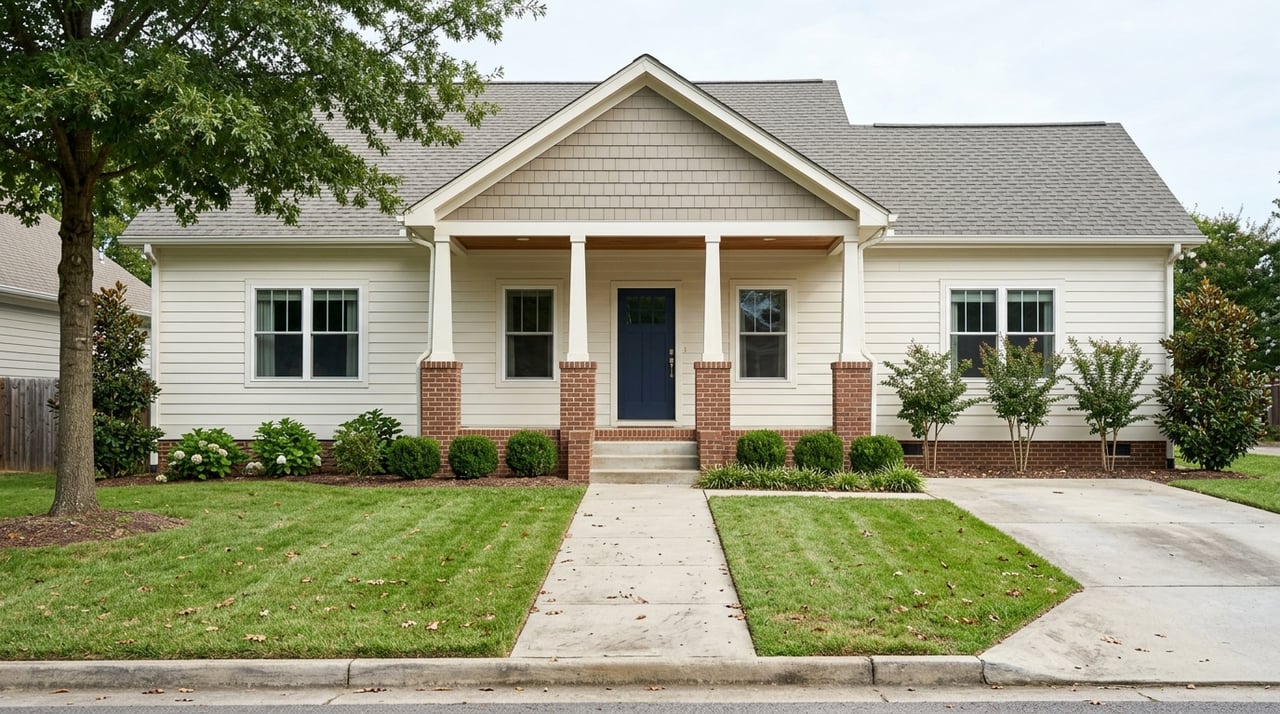
If you picture your first home as a single-family house with a more traditional neighborhood feel, Asheboro may line up well with your search. The market tends to support buyers who are focused on value and space in a smaller-city setting. That can be appealing if you want a straightforward path into homeownership.
For buyers who want a home base in Randolph County and a community-rooted feel, Asheboro often checks important boxes. It also fits well with buyers looking in the mid-market range where practical value matters.
Greensboro housing feel
Greensboro offers a wider range of choices and a more layered neighborhood pattern. The College Hill Neighborhood Association identifies College Hill as Greensboro’s oldest neighborhood and first local historic district, with styles such as Queen Anne, Colonial Revival, and Craftsman. The city also notes that historic properties and districts are part of Greensboro’s identity.
That does not mean every buyer should target a historic area, but it does show how much broader the housing menu can be. If you want more property types or enjoy comparing very different parts of the city, Greensboro gives you more to explore.
Commute and transportation options
Interestingly, the average commute times are almost the same. Census data shows a mean commute of 22.3 minutes in Asheboro and 21.7 minutes in Greensboro. So if you are only comparing average commute length, the difference is small.
What really changes is how you get around and where you need to go. Greensboro has a more robust local transit setup. The city says Greensboro Transit Agency runs bus service seven days a week with 16 routes, along with paratransit and intercity bus connections.
Asheboro has regional transportation options too, but they are more limited. PART Route 10, the Randolph County Express, operates Monday through Friday and connects Asheboro, Randleman, UNCG, and Greensboro Depot, with stops that include the North Carolina Zoo, Randolph Community College, Randolph Health, and park-and-ride lots. RCATS also provides advance-reservation transportation for Randolph and Montgomery County residents.
Which setup fits your life?
If you expect to drive most places and want a smaller home base, Asheboro can work well. It can also make sense for Triad commuters who are comfortable using a weekday regional route or making regular drives. The average commute data shows that smaller-city living does not automatically mean a longer trip.
If you want more local transit options built into daily life, Greensboro has the advantage. That can matter if you value flexibility, want easier car-light living, or like being in a city with a denser transportation network.
Everyday lifestyle and local feel
Buying your first home is not just about the house. It is also about what your weekends, errands, and routines feel like once you live there. Asheboro and Greensboro offer two distinct lifestyle patterns.
Asheboro’s identity is tied to a compact downtown and well-known regional attractions. The North Carolina Zoo area guide points visitors to downtown Asheboro, Seagrove pottery, hiking trails, and the Uwharrie Mountains. Downtown Asheboro highlights restaurants, shops, events, and the NC Main to Main Trail.
Greensboro offers a broader amenity base. The city runs an extensive parks and recreation system with parks, gardens, trails, greenways, lakes, and recreation centers. Greensboro is also home to cultural sites such as the Greensboro History Museum and the International Civil Rights Center & Museum.
PTI airport adds another practical advantage for Greensboro-area living. The airport describes itself as a regional transportation anchor located at the hub of the Piedmont Triad, between Greensboro, Winston-Salem, and High Point. If travel convenience matters to you, that may carry weight.
A simple lifestyle comparison
Asheboro often feels more compact and quieter, with a small-town rhythm and easy connection to local spots. Greensboro tends to feel busier and more layered, with a deeper bench of amenities and activity. Both can be a good fit, but they support different versions of everyday living.
If your ideal home base includes a slower pace and local familiarity, Asheboro may feel more natural. If your ideal setup includes more options close at hand, Greensboro may feel like a better match.
Which city may fit you best?
There is no one-size-fits-all answer, but a few buyer profiles stand out.
Choose Asheboro if you want value and space
Asheboro may be the better fit if you are:
- Watching your budget closely
- Prioritizing lower monthly housing costs
- Looking for a single-family-first market
- Drawn to a smaller, more compact setting
- Comfortable driving or using limited regional transit options
For many first-time buyers, Asheboro creates a more accessible path to ownership. Lower sale prices and lower ownership costs can make it easier to buy without stretching too far.
Choose Greensboro if you want variety and access
Greensboro may be the better fit if you are:
- Open to a wider range of home types
- Looking for more neighborhood variety
- Wanting stronger local transit access
- Interested in a denser mix of parks, museums, and city amenities
- Willing to pay more for convenience and options
If your budget allows for it, Greensboro can offer flexibility that some buyers value highly. The broader housing mix and transit network may open up possibilities that are harder to find in a smaller market.
A smart way to make your decision
If you are stuck between the two, start with your non-negotiables. Think about your target monthly payment, your preferred home type, and how much commuting or driving you are comfortable with each week. Then compare those priorities against what each market actually offers.
It also helps to think one step beyond the purchase. Ask yourself where you are more likely to feel settled in your day-to-day life. Your first home should support your finances, but it should also fit the way you want to live.
When you are ready to weigh real listings, neighborhood feel, and your budget side by side, working with a local expert can make the choice much clearer. If you want guidance on Asheboro, Greensboro, or both, Pam Robbins can help you compare your options and move forward with confidence.
FAQs
Is Asheboro or Greensboro more affordable for first-time buyers?
- Asheboro is generally more affordable based on the research report, with a lower April 2026 median sale price, lower median owner-occupied value, lower monthly owner costs with a mortgage, and lower median gross rent.
Is Asheboro or Greensboro better for single-family homes?
- Both markets have a majority of detached housing, but Asheboro is framed more clearly as a single-family-first market, while Greensboro offers a broader mix that includes more multifamily housing options.
Is commuting easier from Asheboro or Greensboro?
- Average commute times are very similar, but Greensboro offers more local transit options through a seven-day bus system, while Asheboro relies more on driving, a weekday regional express route, and advance-reservation county transportation.
Does Greensboro offer more housing variety than Asheboro?
- Yes. The research report shows Greensboro has a broader housing mix, including more multifamily buildings and historic-home areas, while Asheboro tends to be more focused on detached single-family homes.
What is everyday life like in Asheboro compared with Greensboro?
- Asheboro tends to feel more compact and quieter, with a downtown-centered lifestyle and access to attractions like the North Carolina Zoo and nearby outdoor areas, while Greensboro offers a denser set of parks, cultural sites, transit, and regional travel access.
How do I decide whether Asheboro or Greensboro fits my first home goals?
- Start by comparing your budget, preferred home type, commute needs, and lifestyle priorities. Asheboro often fits buyers focused on value and space, while Greensboro often fits buyers who want more variety and convenience.